
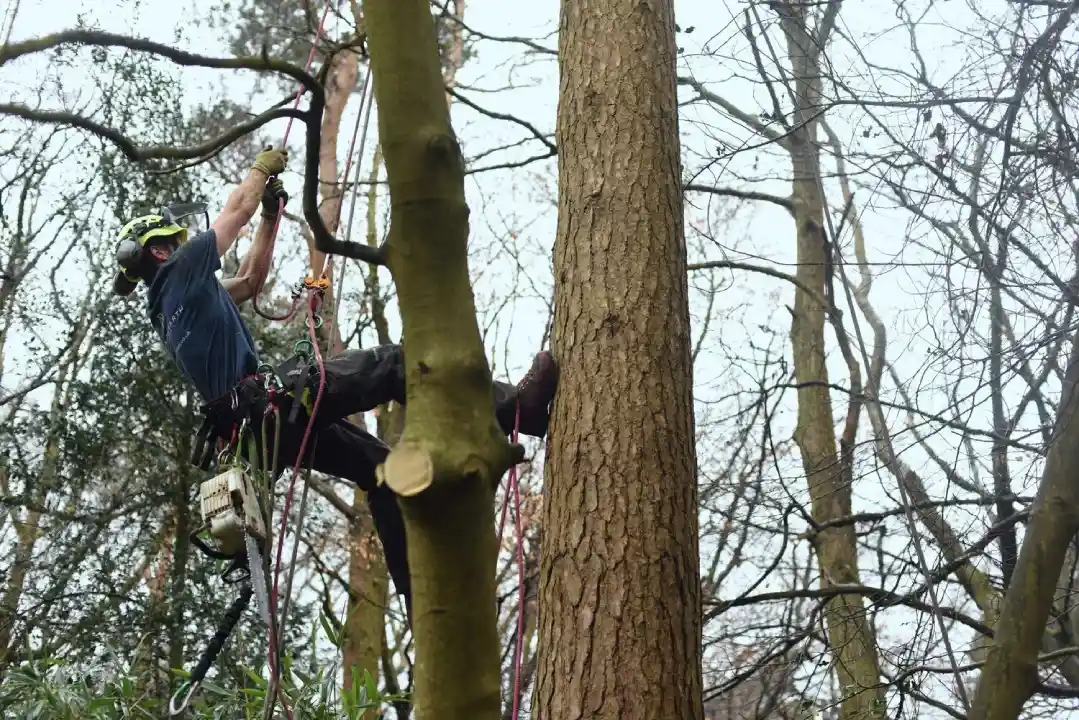
Most homeowners in Brighton don’t call a tree surgeon because they want work done. They call because something doesn’t look right and they’re unsure whether it’s serious or safe to ignore.
Winter is when that uncertainty matters most. Strong winds, heavy rain and saturated ground can turn small, hidden problems into sudden damage. Branches that held firm all summer can fail overnight, and trees that looked stable can begin to shift once the soil softens.
This guide is not about panic or selling unnecessary work. It’s here to help you decide, calmly and clearly, when it makes sense to get a tree checked and when monitoring is enough.
Why Winter Is the Most Risky Season for Trees
Trees cope well with change when conditions are stable. Winter removes that stability.
In Brighton, winter often brings a combination of coastal winds and prolonged damp ground rather than deep frost. That combination weakens trees in ways that are not always obvious at first glance.
Waterlogged soil loses its grip around roots. Gusty winds put extra strain on the trunk and larger branches. Cold snaps reduce a tree’s ability to recover from stress. Problems that were contained in summer can suddenly progress in winter.
If something feels different about a tree now, there is usually a reason.
Warning Signs You Should Not Ignore
Most people don’t notice one dramatic change. They notice small things that start to add up. These are the signs that deserve attention.
Visible changes in the tree
A tree that is leaning slightly more than it used to, especially after heavy rain, is worth checking. Cracks along the trunk, splitting bark, or large branches that sway more than before are also warning signs.
Hanging or broken branches that have not yet fallen are particularly risky in winter winds.
Changes around the base of the tree
Look at the ground near the trunk. Exposed roots, lifted soil, or areas that stay wet long after rain can indicate movement below ground.
Fungal growth or mushrooms appearing around the base can suggest decay in the roots or lower trunk. This does not always mean the tree is unsafe, but it should never be ignored.
Sudden or unusual behaviour
If branches fall without strong wind, or if one side of the tree loses leaves earlier than the rest, the tree may already be under stress.
A healthy tree usually changes gradually. Sudden changes are the ones to take seriously.
Signs You Can Monitor vs Signs You Should Act On
Not every issue needs immediate professional work. Knowing the difference builds confidence and avoids unnecessary action.
Issues that can sometimes be monitored
Small amounts of deadwood high in the canopy are common, especially in older trees. Seasonal leaf drop and minor surface cracks that have not changed over time are also usually part of a normal cycle.
If a tree is well clear of buildings, roads and footpaths, monitoring may be reasonable.
Signs that call for professional assessment
If a tree is close to your home, a neighbour’s property, a public path or a road, the margin for error is smaller. Leaning combined with soft or sinking ground is another sign that should be assessed.
Large branches over roofs, driveways or gardens where people regularly walk are not something to leave until spring.
A responsible tree surgeon will tell you when no work is needed. An inspection does not automatically mean cutting or removal.
What Happens If These Signs Are Ignored
Most winter tree damage does not happen gradually. It happens suddenly.
Branches often fail at night during high winds. Trees can shift after days of rain rather than during storms. Once damage has occurred, the cost and disruption are usually higher than they would have been with early intervention.
There is also the issue of responsibility. If a tree from your property causes damage and there were visible warning signs beforehand, it can lead to disputes or insurance complications. Acting early is not about blame, it is about prevention.
Why People Delay Calling a Tree Surgeon
Many homeowners delay because they don’t want unnecessary work done. Others assume the issue can wait until spring, or worry about cost without knowing what is involved.
In reality, a winter inspection is about information. It allows you to understand what is happening and what your options are. Often the outcome is reassurance rather than action.
Waiting until a problem becomes obvious usually reduces those options.
What a Winter Tree Inspection Actually Involves
A professional winter inspection is straightforward and practical.
It typically includes a visual assessment of the trunk and canopy, checks around the base and root area, and an evaluation of how the tree interacts with its surroundings. The aim is to assess stability, risk and overall health.
You should expect clear explanations, not technical jargon, and honest advice about whether anything needs to be done now, later, or not at all.
Why Local Experience in Brighton Matters
Trees behave differently depending on soil type, exposure and local weather. Brighton’s coastal environment, varied ground conditions and conservation areas mean experience in this area matters.
A local professional understands which trees are most affected by wind, where drainage issues commonly occur, and how council rules apply to protected trees.
That local knowledge is why homeowners choose Brighton Tree Surgeon for winter assessments. Familiarity with Brighton’s conditions leads to better judgement and safer outcomes.
When You Should Call Immediately
Some situations should not be delayed.
If a tree has begun leaning noticeably after a storm, if large branches have already fallen, or if a tree is touching buildings or power lines, professional advice is urgent.
Cracking sounds, sudden movement, or visible root lift are also reasons to act quickly. These are not situations to monitor.
A Quick Self-Check to Help You Decide
Ask yourself three simple questions:
Has the tree changed recently?
Is it close to anything that could be damaged?
Has the ground around it become softer or unstable?
If the answer is yes to two or more, it is sensible to have it checked.
Final Thoughts
Most people who call a tree surgeon say the same thing afterwards. They wish they had done it sooner.
A winter inspection is not a commitment to work. It is a way to remove uncertainty and reduce risk. In many cases, it confirms that a tree is safe with simple monitoring. In others, it prevents sudden damage.
If something about a tree on your property does not feel right this winter, trust that instinct. A short conversation and a professional look can provide peace of mind.
Brighton Tree Surgeon offers clear, honest winter tree assessments for homeowners across Brighton and Hove. Acting early keeps options open and problems manageable.
Frequently Asked Questions
How do I know if I need to call a tree surgeon?
If a tree is leaning, has large dead or hanging branches, shows cracks in the trunk, or the ground around it feels unstable, it’s sensible to get professional advice, especially during winter.
Is a leaning tree always dangerous?
Not always. Some trees naturally lean. However, if the lean has increased recently, or it’s combined with soft ground or exposed roots, it should be checked by a tree surgeon.
Should I wait until spring to deal with tree problems?
Waiting can increase the risk. Winter weather can worsen existing weaknesses, and early inspections often prevent sudden damage and higher repair costs later.
Does calling a tree surgeon mean my tree will be cut down?
No. A professional inspection is about safety and health. In many cases, no work is needed, or only light maintenance is recommended.
When should I call a tree surgeon immediately?
You should call straight away if a tree has shifted after a storm, large branches have fallen, or the tree is close to buildings, roads, or power lines.